When we teach creative writing, we teach and strengthen creative thinking as well as written expression. Watching students dive into a writing-based project and invest effort and creativity into something I knew flexed and deepened their thinking brought me great joy as a teacher.
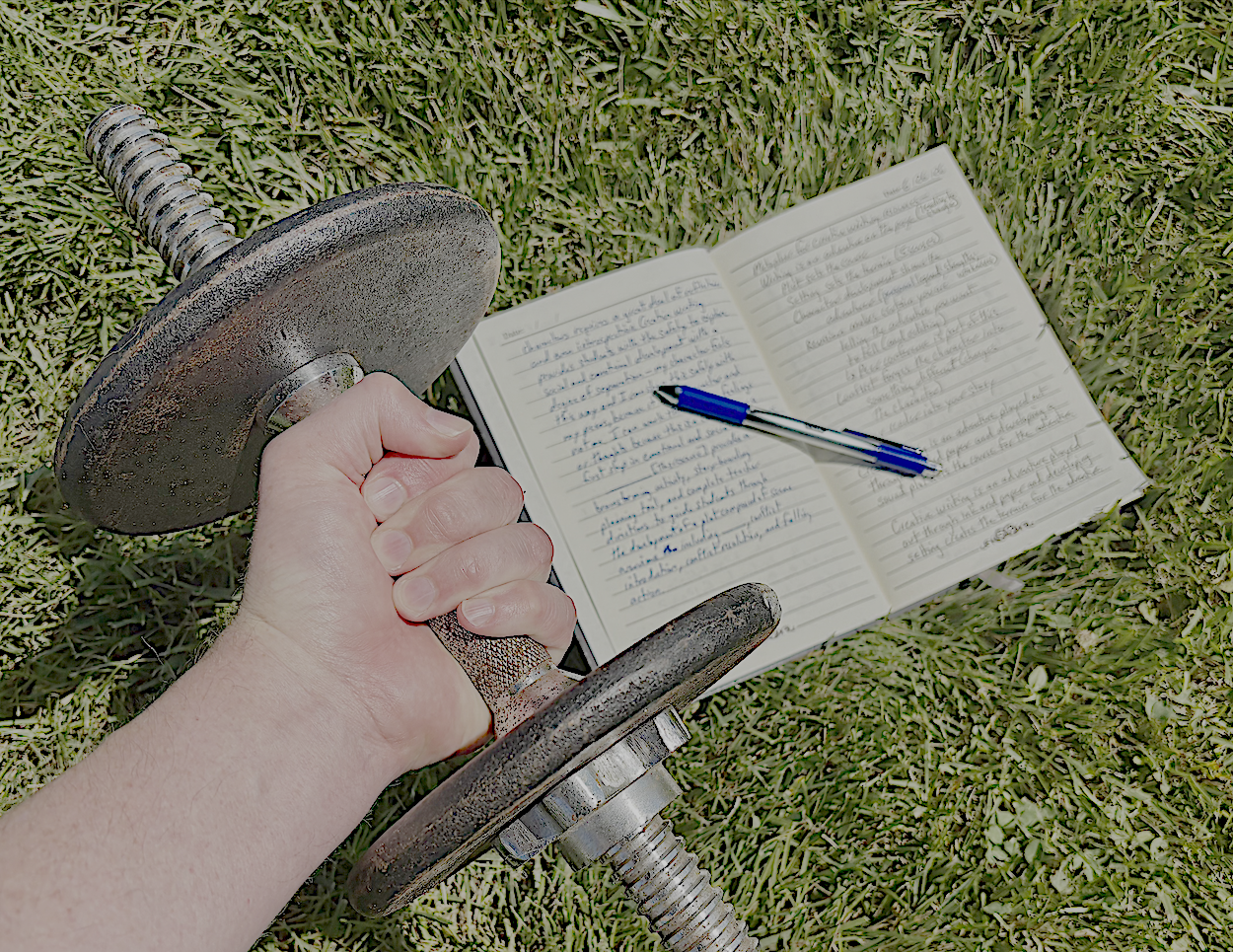
We often think of creative writing as the purview of English or Language Arts classes, but I taught Social Studies and found many ways to work subject-specific content and skills into creative writing experiences. William Zinsser writes in his book On Writing Well, “…writing is not owned by the English teacher. Writing is thinking on paper.” I like to take Zinsser’s point one step further. Writing is thinking and a workout for the brain.
How is writing exercise for the brain?
I often described to students how our brains are like muscles, and writing is a form of strength training, stretching, and endurance building all in one. Developing solutions to problems, generating new ideas, and making connections between concepts and points of information is the heavy lifting of a writing exercise program. Exploring ways to generate and express ideas and information through creativity and imagination is mental yoga stretching students’ thinking beyond what is known and making “thinking outside the box” a more comfortable and familiar part of cognition. Becoming engrossed in a topic or issue, using this feeling to keep pen to paper, and persevering until a project is completed serves as endurance building. The tangible products of “writing exercise” bring with them realizations students can accomplish challenging tasks and grow through writing. The proof is right there, in front of them, on their papers and screens.
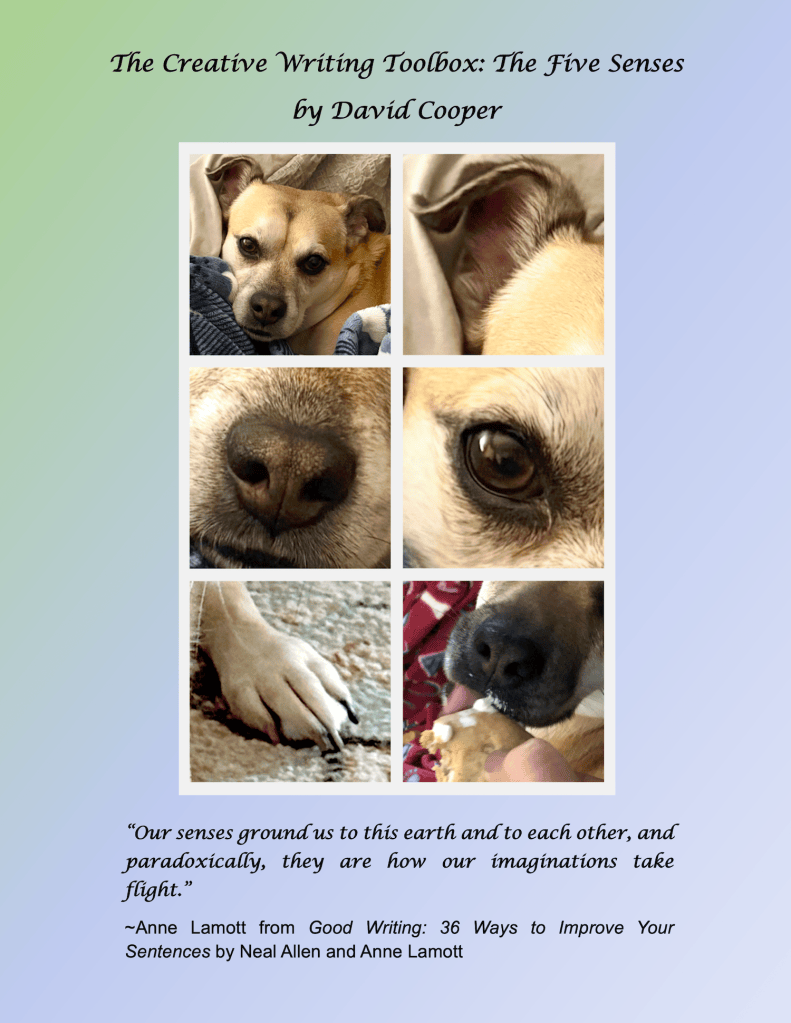
The Creative Writing Toolbox: The Five Senses provides students grades six through eight with the skills to draw readers into creative writing through the five senses. This resource includes a vocabulary-focused warmup activity entitled “The Five Senses Word Scramble,” a scaffolded exercise introducing students to writing with the five senses entitled “Using Your Senses to Create Delicious Writing,” and “Using the Five Senses in a Scene,” a comprehensive planning tool to help students incorporate sensory descriptions into existing writing.
How do I put together a writing workout plan?
You already have one. The traditional writing process is not only a method for developing a polished piece of writing but serves as a cognitive framework, a process for gathering information, organizing information and ideas, making connections, and expressing clearly one’s findings— in other words, thinking. Here is the writing process when viewed through the lens of thinking:
Brainstorming allows students to process given tasks, access prior knowledge, and formulate possible paths to achieving what has been asked of them while reducing anxiety related to taking on new projects.
Research involves the search and discovery of information which can and should occur in the world of storytelling just as often as in the world of informative writing, particularly when providing contexts for characters and conflicts.
Organization calls upon students to find meaningful connections within their collected information and to arrange or rearrange knowledge and ideas into meaningful structures, often referred to by psychologists as schemata.
Drafting involves an internal conversation whereby students process the connections they have made and come up with ways to present their new and creative thinking.
Editing and Revision enables students to clarify information and thinking so these are not only communicated clearly but are also understood thoroughly by the writer.
Publishing (Sharing) enables students to experience and share the fruits of their labors, which promotes intrinsic motivation for future writing and often leads to even more discoveries and understandings through their sharing.
What are some strategies I can use to promote creative writing?
Creative writing does not have to take the form of a full short story or novella developed over days or weeks in a classroom. Even short warm-up or transition exercises can flex writing and cognitive muscles. The key to creating cognitively engaging long and short writing tasks is to expose students to a variety of novel and unexpected challenges while giving them enough creative freedom to want to assume ownership of process and product. How did this minor character experience a pivotal scene in the story? How did this “common person” experience the historical event? How would a person without the use of sight/smell/hearing have experienced this event? Move away from tasks involving “tell me what you know” to those based upon “show me your thinking and that you understand.” Here are some writing prompts representing several subject areas:
- What would a Continental Soldier from Pennsylvania think/see/feel as Washington rode by him during the Valley Forge Encampment? (History/Social Studies)
- What did a boy sweeping Thomas Edison’s workshop think/see/feel as Edison’s carbonized cotton filament burned in the first fully functioning light bulb? (Science)
- What did the leader of the flying monkeys think/see/feel when he reached to take Dorothy but saw the mark of the Good Witch’s kiss on the girl’s forehead? (English)
- Create a character faced with a challenge, express the challenge as a word problem (include at least two number values, a variable, and all necessary units), solve your problem showing all your steps, and explain how your character met the challenge. (Math)
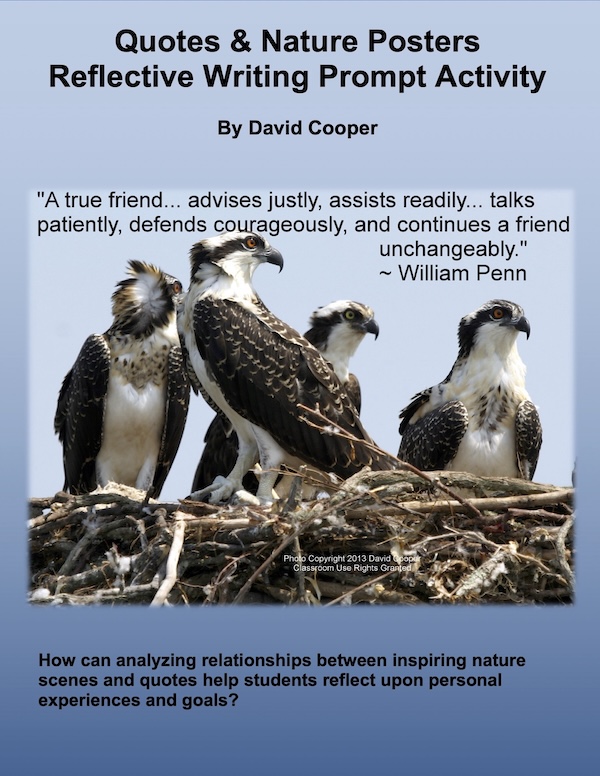
Quotes and Nature Posters Reflective Writing Prompt Activity’s ten vivid thought-provoking nature posters incorporating timeless quotes will inspire your students to write about their experiences and goals. Use the posters and scaffolded writing activity to promote authentic, relevant, purpose-driven skill development. This is not a once-and-done activity. Use these prompts and the activity multiple times through the school year. With each implementation, students select different posters inspiring unique reactions and personally relevant summaries.
Where does creativity come from?
This question is another way to express the one asked frequently of artists, “Where do your ideas come from?” My answer is from practice. Maya Angelou once said, “You can’t use up creativity. The more you use, the more you have.” The more we challenge our minds and the minds of our students with varied and engaging writing tasks, the stronger, more flexible, and greater cognitive stamina become. If we see our brains as muscles, we need to work them like muscles, and no algorithms or data centers can help us with that.
Attribution for Maya Angelou’s Quote
As cited in Ardito, Mary. “Creativity: It’s the Thought that Counts.” Interview of Maya Angelou. Bell Telephone Magazine Vol. 61 #1. American Telephone and Telegraph Company. New York. 1982


You must be logged in to post a comment.