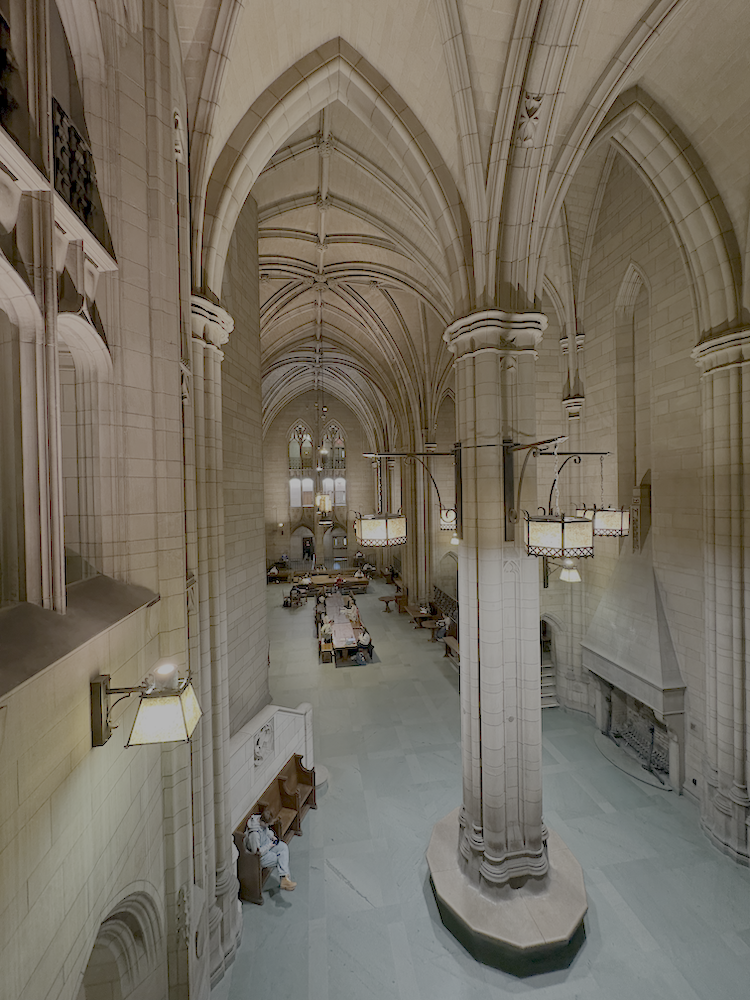
Details possess a lot of power. Judy and I visited the University of Pittsburgh’s Cathedral of Learning in April. Despite feeling overwhelmed by the tower’s architectural grandeur, I remember vividly tiny wood-carved monk embellishments on the arms of benches. The little guys were microscopic in relation to the cathedral’s 42-story Gothic Revival architecture, yet their whimsy seized a disproportionate amount of my attention.

The small monks found here and there in the Commons Room reminded me of how carefully chosen and well-placed details are powerful tools to establish place, set mood, engage the reader, and convey meaning. In my short story “Jacob’s Fancies,” setting served as a character and choosing the kinds and numbers of details necessary to make this work required committing many details to paper then choosing only those contributing to and moving the story forward.
Details to Establish Place
A few well-placed details can establish and enrich senses of location and time. Jacob “parted leaf-heavy sassafras boughs with his paddle, slipped between green hands, and entered silence.” He didn’t paddle through the trees and enter the stream but “parted leaf-heavy sassafras boughs” and “slipped between green hands,” which gives the reader specific references and images to help paint a mental picture. “His eyes adjusted from the river’s glare to a canopied stream’s tempered light.” Jacob’s eyes didn’t adjust to a shaded stream but adjusted to the stream’s soft light filtering through the canopy above him. Details can also establish time. Jacob is carrying his father’s canvas tool sack in his canoe. Not a toolbox, not a duffle bag full of tools, and not a simple mention of his father’s tools, but a canvas tool sack. This simple three-word reference gives the reader a pretty good idea the story is taking place in the past. Combined with him wearing ox-hide boots and having a water bag filled with “dirty well water,” we get a sense of time without breaking the fourth wall and stating, “this story takes place in 1780.”



Details to Engage Readers
Sensory details do much to pull readers into a scene, particularly when moving beyond the often-overused sense of sight. Here are some examples of touch (physical sensation) and sound from “Jacob’s Fancies”: “Cool air massaged his face and made it tingle,” “Heat rose into the tips of the son’s ears,” “The canoe’s keel dragged across the stone bottom making the sound of the stream clearing its throat,” and “A bubbling white ribbon tied a pool above the boulders to another below and gurgled like water spilling from cupped hands into a washbowl.” We live in a world of sight, hearing, taste, and touch—the same kind of world our characters move through in our stories. Using these kinds of details helps to bring the world of the story closer to the world of the reader.
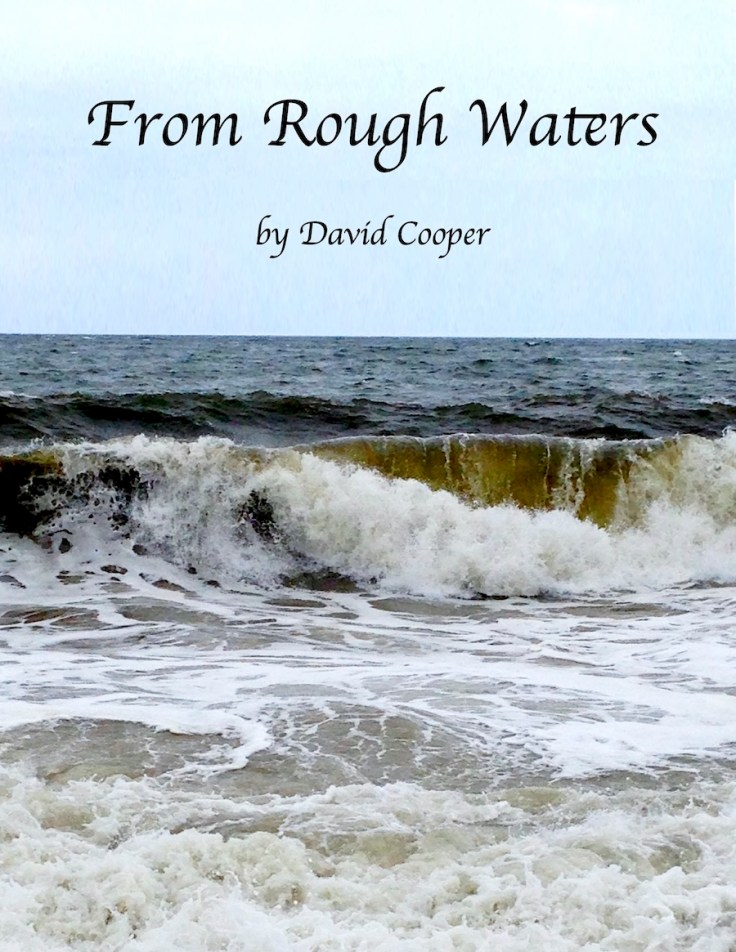
You can find my short story “Jacob’s Fancies” along with the historical fiction pieces “Freshet Run” and “The Dredgers” in the ebook From Rough Waters available through Amazon and Barnes and Noble.
Details to Set Mood
Mood is often established by describing characters’ reactions, revealing thoughts, or through dialogue, but mood can also be expressed through objects placed within the setting or indirect actions occurring around the characters. “The cleft between hills narrowed to where a rhododendron arch connected the slopes. Dark-green waxy-leafed branches loped over the water forming a low, narrow tunnel.” Specific uses of rhododendron and dark-green waxy-leafed branches contributed to building senses of peril and anxiety as Jacob prepared to pass through some of his fears. “Droplets tapped upon shale plates. Marked time as the light in the glen faded into dusky gray.” These lines established urgency when Jacob worked his way through a gorge. He knew darkness drew near, the reader knew darkness drew near, but me, as the writer, never wrote, “darkness drew near.” Details helped me maintain a sense of invisibility—the reader stayed in the story and never saw or heard me.
Details to Convey Meaning
Clear and carefully selected details can do some of the heavy lifting when conveying a message to the reader. Consider these sentences. “Broken clouds painted in shades of yellow, orange and red pulled Jacob’s thoughts away from the darkness behind him. He sat on a chalk-white boulder watching fancies unfold before him, and he trusted the fancies to tell him where he belonged.” The details of the sunset’s colors, the white boulder, and the darkness behind him drove home the point Jacob had just climbed his way out of an uninspired life and was entering a new one filled with possibilities and beauty.
 david cooper writing
You must be logged in to post a comment.