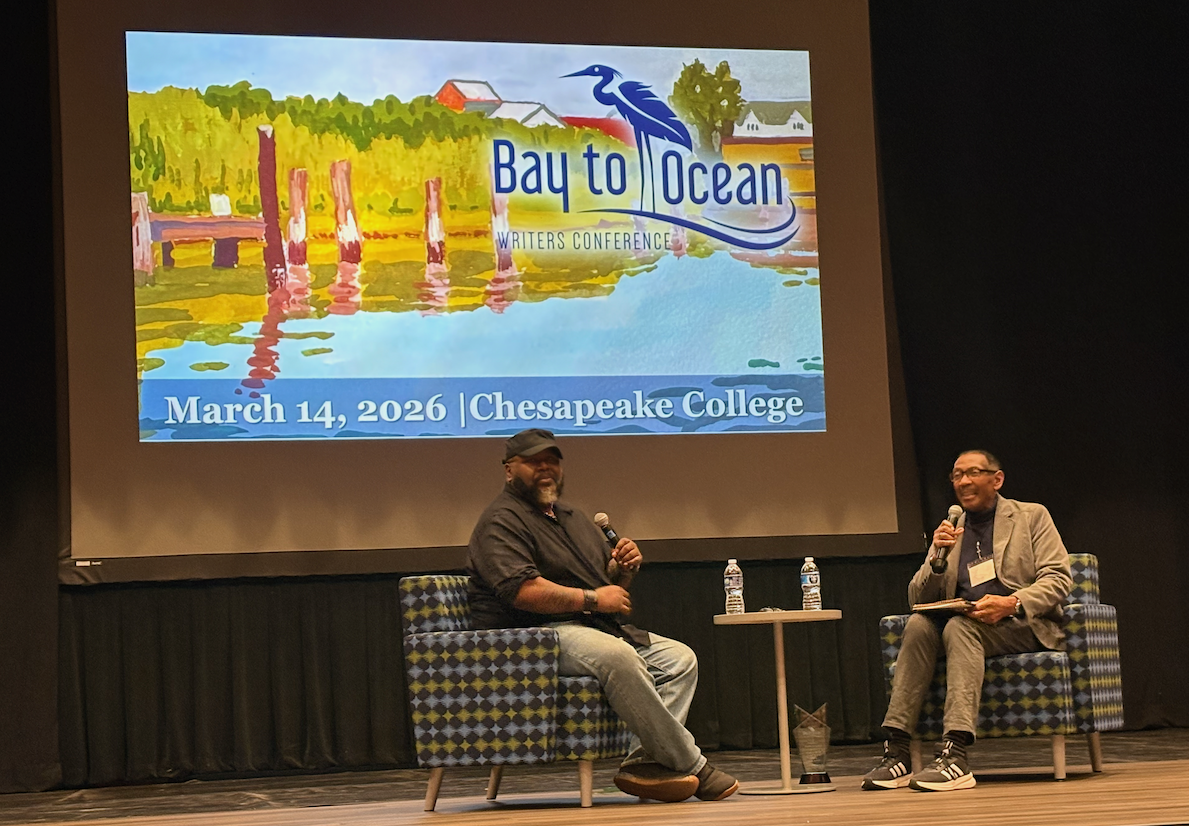
“Are you going to the writers’ conference Saturday?” My Browseabout Book Store colleague Bethany spun on the squealing desk chair.
I rattled-off the sessions I wanted to attend. “The lunch keynote is with S.A. Cosby.”
“Wait, S.A. Cosby?” Bethany’s eyes grew wide, and I feared I would become a spotter for a gymnastic-style leap. “I love S.A. Cosby!”
I knew little about Cosby, basically the blurb in the Bay to Ocean Writers Conference program, but I soon understood Bethany’s reaction. Cosby entertained, informed, and inspired his audience and me. Whether by design or happenstance, my day seemed to be built around Cosby’s keynote.
Novelist Austin Camacho, who was also Cosby’s initial publisher, ran the first session I attended, which focused on the elements of conflict and suspense in fiction. Camacho began with an insightful and succinct description of the relationship between these elements. “Conflict drives a story forward; suspense is what draws your reader through the story to what is hopefully a satisfying conclusion.” He advised writers to decide, early in the writing process, “…what your protagonist really wants.” The plot is how to get there, and the emotions of your characters are the motivation to get there.
“Create Your Character’s Arc” by writer Susan Reiss seemed a natural follow-up to Camacho’s session. Reiss encouraged the use of enneagrams to build behaviorally believable characters and to map their personality changes through a story’s arc. Enneagrams classify personalities into nine types based upon fears and desires and can help writers match behaviors to personalities while showing a character’s evolution when subjected to stress (conflict).
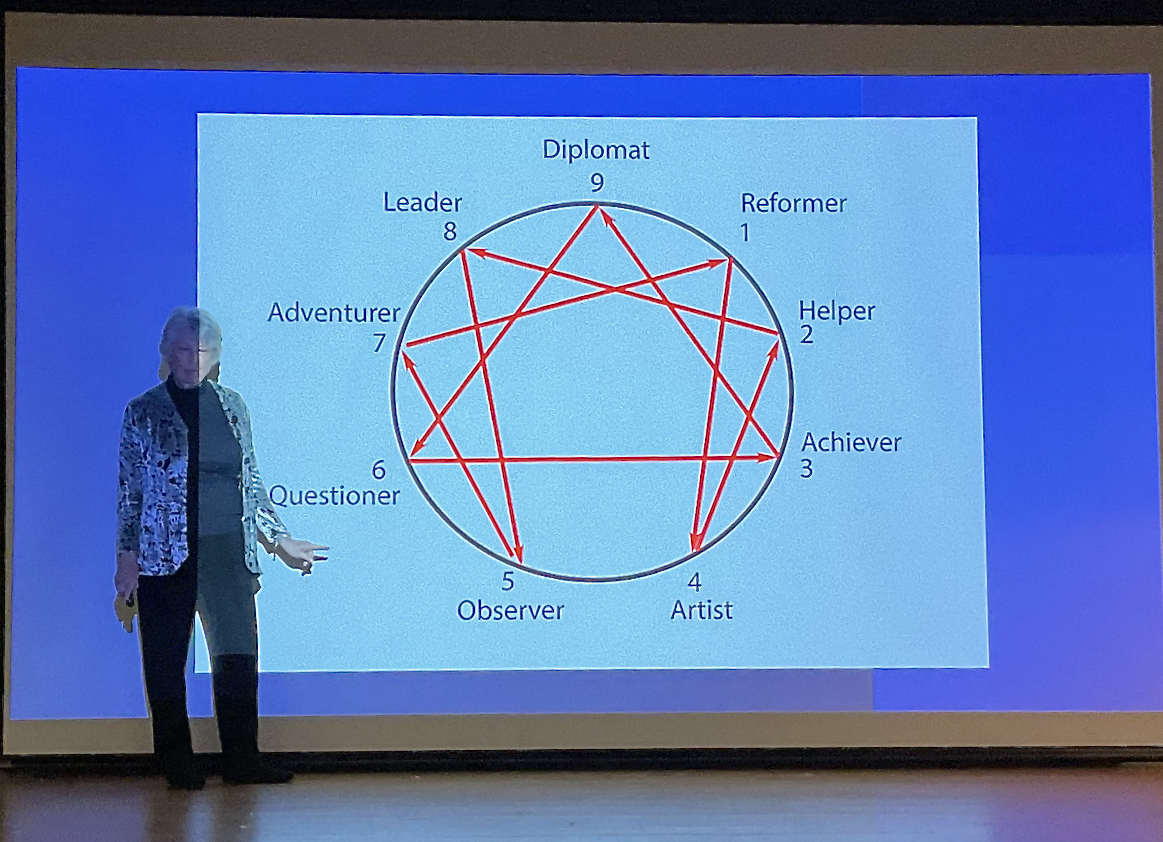
For instance, a protagonist may begin as an observer enneagram type– someone who fears being seen as foolish and desires mastering some type of skill. The protagonist faces a conflict, which begins a transformation. Observer becomes an adventurer type who fears feeling trapped by circumstances and wants escape. Reiss’ session challenged me to think about characters’ personalities, complementary behaviors, and believable change. Enneagrams offer an intentional approach to a fundamental element of strong fiction— the evolution (or de-evolution) of characters. A conference attendee would ask Cosby a great question pertaining to character development later in the day, and his response spoke to the importance of developing believable characters in which readers can become invested.
Author and writing mentor Laura Oliver conducted the third session I attended, “Tiny Truths: Writing Micro Memoir.” Creating short vignettes of personal experience, generally 250 to 700 words in length, can provide powerful bursts of beauty and insight for readers and those writing them. Structurally, Oliver describes powerful micro memoire as “an extremely personal moment opened to the universal in its last line.” Oliver explained, a micro memoire is “an anecdote, a reflection, a moment—to be literary, it needs to cause an impact that lingers beyond what is on the screen or page.” I was struck by how the skills involved with writing micro memoire can also strengthen prose, specifically approaching scenes as vignettes of a character’s experience and the need for effective and economical word choice. Writing micro memoire can certainly hone a writer’s ability to say more with less and to keep an eye on the emotional implications of scenes—emotional impact and strong characters being topics Cosby touched upon in his keynote, which came next.
Stay tuned for part two of this two-part post on the 2026 Bay to Ocean Writers Conference…
 david cooper writing