Revising a first draft often involves sifting through pages of setting, backstory, catchy phrases, not-so-catchy phrases, and everything dumped onto the page to find the point where something actually happens. A friend asked me to read the first chapters of his novel based upon his experiences in The Air Force. I highlighted a line about three pages into the text and noted in the margin, “Your novel starts, here.” The first three pages introduced characters and established time and place in a narrative form then presented suddenly a captivating funeral scene telling me more about the people and setting in a single page of dialogue than the first three pages of exposition. Sequences of interrelated scenes form a story, and explanation is not a scene.
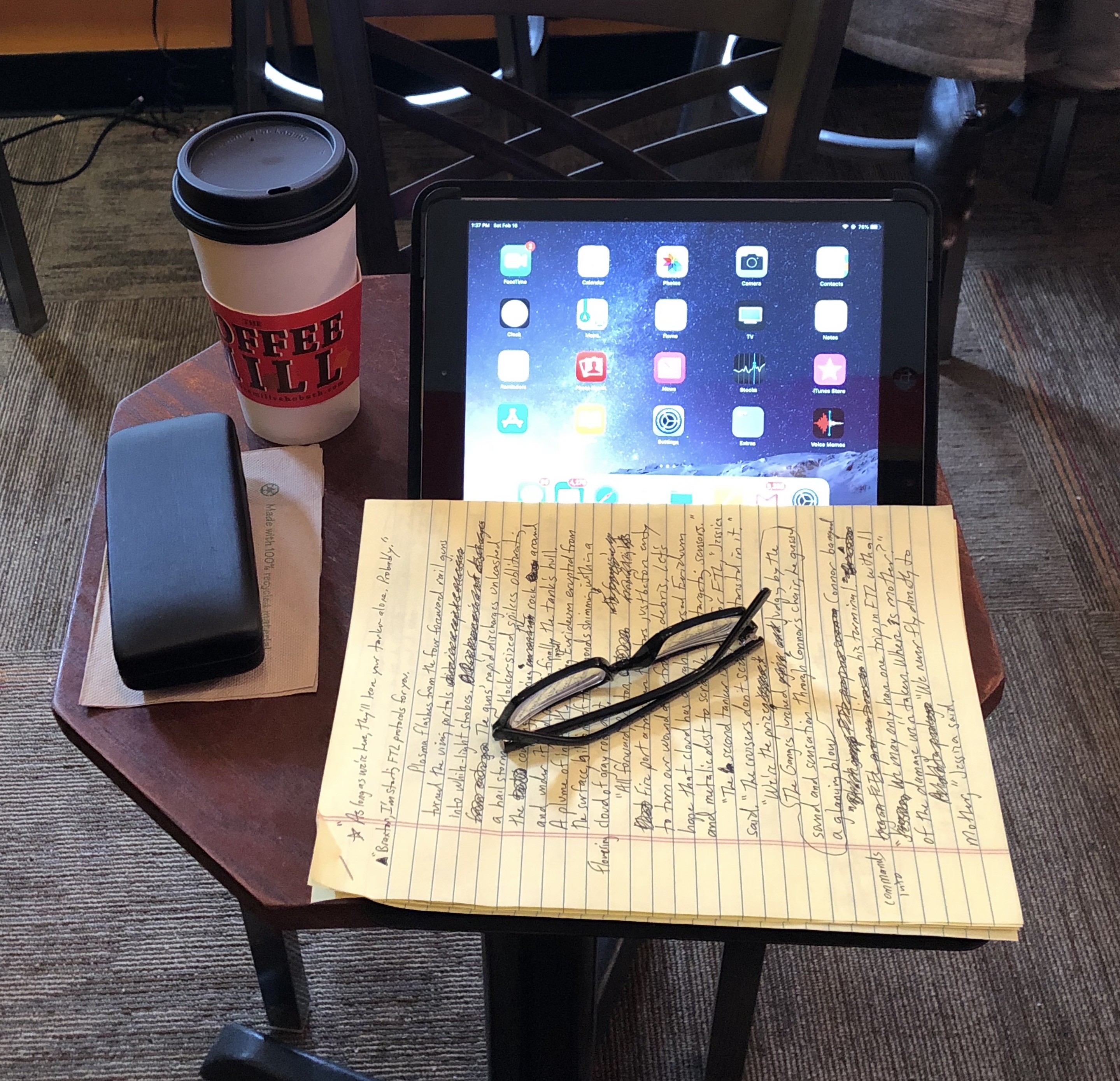
Characters move the story forward through dialogue, decisions (internal dialogue), and actions. These are the tools to reveal plot, character development, backstory, and setting. Unnecessary exposition is a writer’s attempt to become a character, which pulls the reader away from the actual characters and out of the story. Readers should never hear a writer’s voice (actual voice, not stylistic voice). If explanation is imperative to the story, it can and should be revealed through action.
Don’t get the wrong idea. Exposition in early drafts is not bad. Think of the countless sketches and mock-ups an artist creates before committing oil to canvas. Gallery-goers see the inspiring end-product but not the mundane and solitary drawing necessary to create the beauty, not to mention the artist’s discarded canvases. Sometimes, exposition— the mundane sketches and mock-ups— are the most efficient ways to connect the treasured scenes we pull from the ether for our drafts. Think of these sections of explanation as placeholders. I ask myself often, “How can I turn this explanation into a scene?” Here are a few more questions, which may be helpful in doing just that:
- What are the actions within the exposition, and who should be carrying out the actions?
- How can you turn what is being described into something the character is seeing, hearing, touching, or tasting?
- Is there a conflict or two tucked away in the exposition ready for revelation through characters’ interactions?
- How can this backstory become a revelation drudged up by a dilemma or situation the character experiences (without resorting to a dreaded flashback)?
This doesn’t mean the explanations and cuttings of our early drafts are wasted. I remember watching a question-and-answer session with author Lee Child during which someone asked him how much he cuts from early drafts. He poked a bit of fun when he replied, “you already wrote all of the words, why waste them?” I cut and carve my drafts like a butcher and move potentially usable material to a separate document for future reference. Some of what I cut appears in other scenes or serves as notes to provide me with direction as the draft evolves.
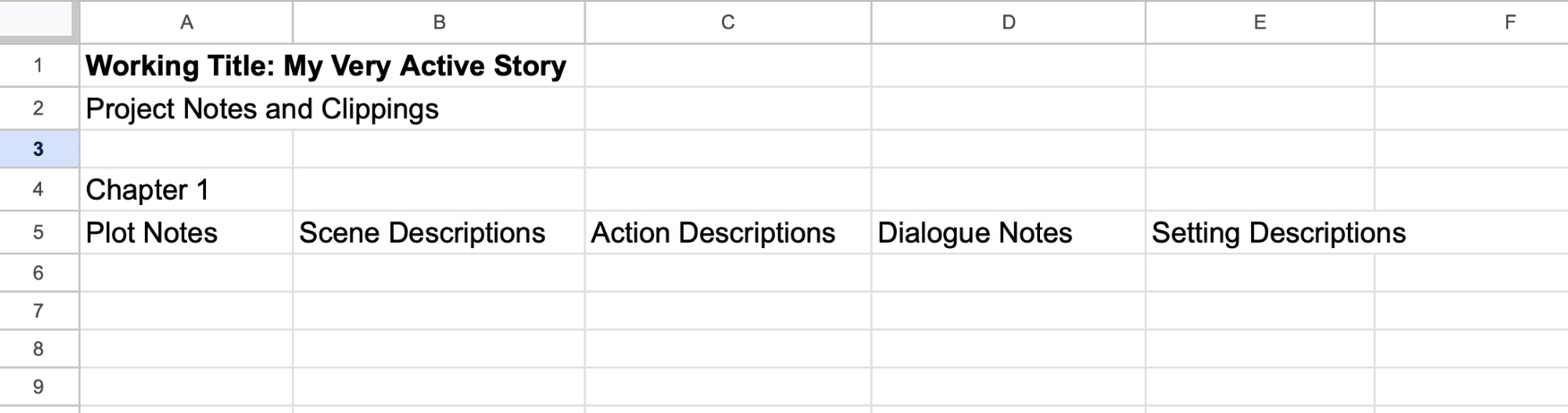
Spreadsheets are a good tool for those of us who don’t want to waste our words. Create a template with an organizational framework you think would work best for a given project, maybe a column for each character or use general headers like, “plot notes,” “scene descriptions,” “action descriptions,” “dialogue notes,” and “setting descriptions.” Often, when I am working on a smaller project like a short story, I simply cut and paste blocks of text to a separate word processing document or even move these to the end of the working draft.


You must be logged in to post a comment.