Proofreading can be a habit just as much as a set of skills, and consistent use of informal writing checklists can help to foster this habit in students. Structured proofreading is an ubiquitous part of composing essays, assembling projects, and writing reports, the big summative projects occurring every-once-in-a-while in our jam-packed curriculums, but are occasional applications of proofreading strategies frequent enough to develop a proofreading habit?
Short and informal proofreading exercises conducted regularly between formal applications can go a long way to show students proofreading is a necessary part of everyday workflows. I have seen students– given time, practice, and consistent exposure– self-initiate proofreading as our school year progressed. These students came to recognize proofreading as essential to producing quality work.
How can I incorporate proofreading into my lessons without sacrificing content?
Consider this, you task students to write an informative paragraph about George Washington as an exit ticket. You provide the necessary prompt on the white board, state clearly each response must be a complete paragraph, and set them loose. Why not include three proofreading steps under the prompt?
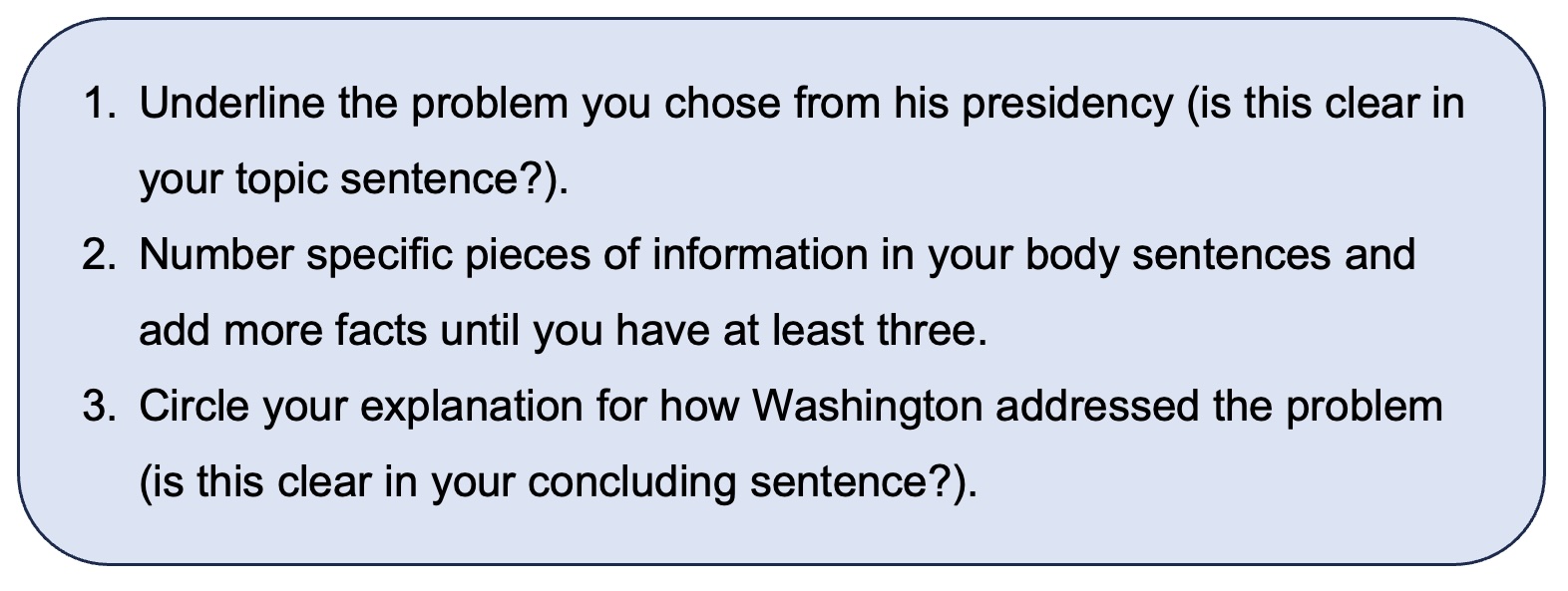
Notice students are asked to engage actively with their writing by underlining, circling, and numbering. Such engagement encourages students to slow their work, focus their thinking, and to reflect upon what they have written. This example may add a few minutes to what is necessary to complete the exit ticket, but it provides a concrete method for students to polish their responses. Students also receive the message proofreading can and should be a part of routine work— not just the big stuff. Ultimately, we want students to produce accurate and clear writing, be deliberate in their expressions, and, most importantly, develop habits encouraging success.
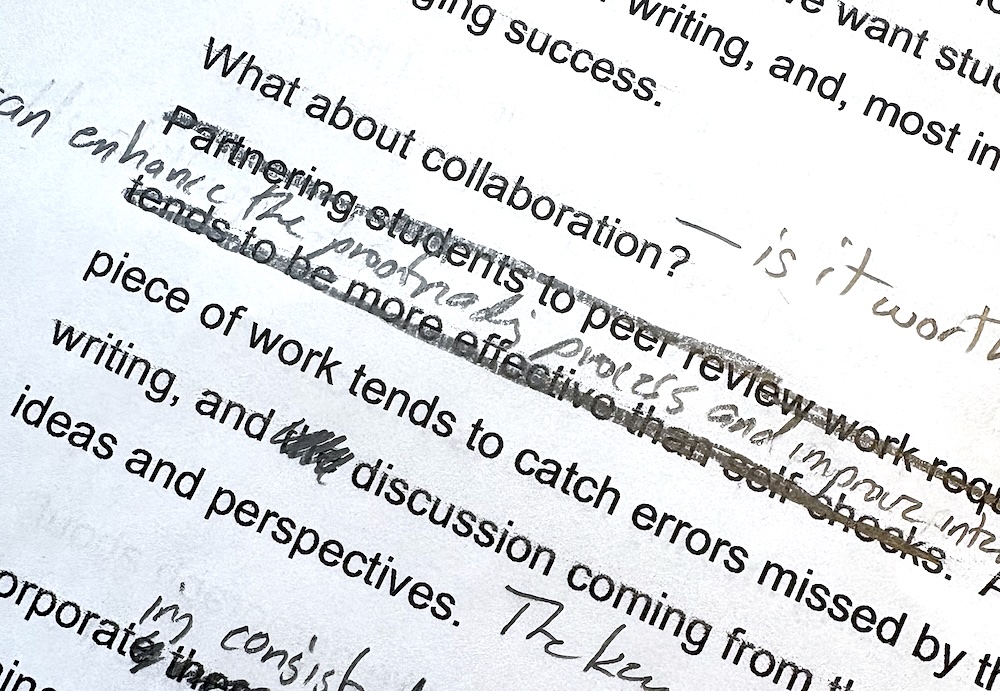
What about collaboration—is it worth dedicating a bit more class time to students’ proofreading?
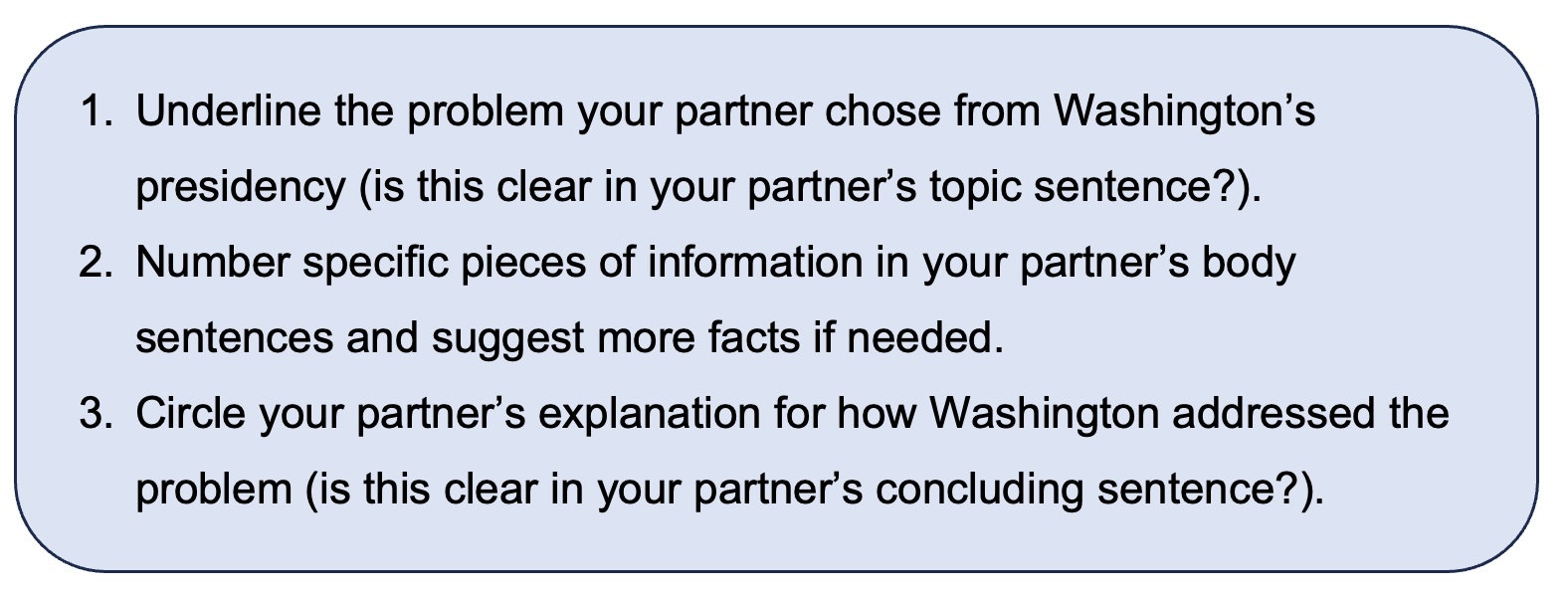
Directed and intentional collaboration can enhance the proofreading process and improve interactions with text. “Directed” means providing clear guidance. “Intentional” is achieved by making the proofreading process active. A second set of eyes on a piece of work tends to catch errors missed by the eyes involved in the initial writing, and discussion coming from peer review can provide new ideas and perspectives.
Let’s take the previous exit ticket example and add the element of collaboration (remind students to write on their partner’s work):
Incorporating consistently informal proofreading practices into your teaching routines will foster the development of proofreading as a habit, communicate its importance in everyday workflows, and demonstrate its value in producing quality work.
Portfolios are Powerful Tools to Encourage Writing Development

Creating and maintaining classroom portfolios can encourage intrinsic motivation, personal investment in work, and provide long-term opportunities for reflection. Portfolios become rich resources for ongoing writing development and self-assessment. Students arrange contents carefully, share work with peers, and make comments like, “I remember this” and “I worked hard on this one” when adding new or reflecting upon existing work samples. Find out more with Teaching Writing With Portfolios Across The Subject Areas at Teachers Pay Teachers.
 david cooper writing
You must be logged in to post a comment.