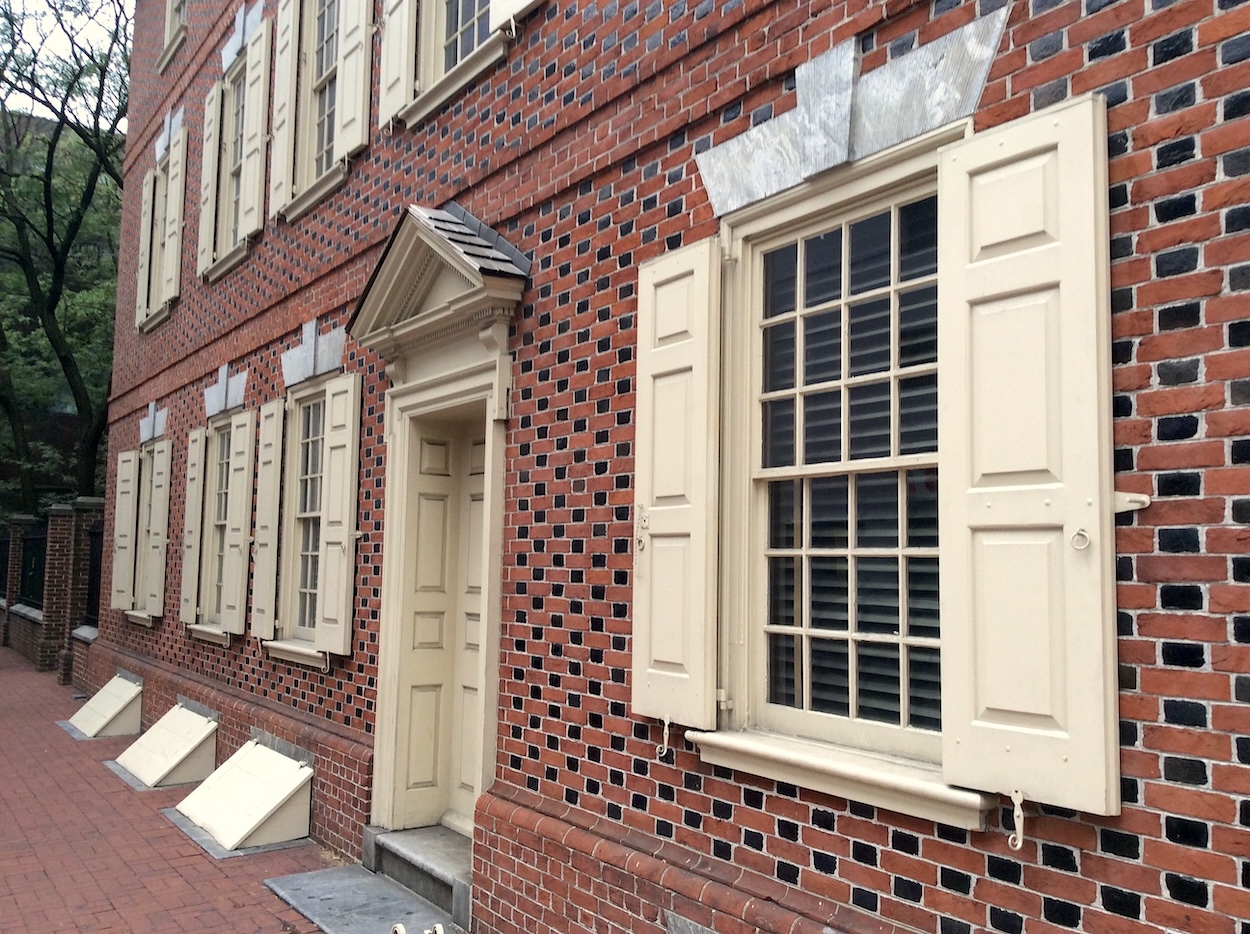
Thomas Jefferson drafted the Declaration of Independence in rooms he rented from bricklayer Jacob Graff at 700 Market Street in Philadelphia. The home is administered by the National Parks Service and is open to public tours.
The desire for independence from Great Britain grew slowly in American colonists’ hearts. Their central grievance with the mother country involved the lack of colonial representation in British government, particularly when it came to taxation. Massachusetts lawyer James Otis wrote in 1764, “the very act of taxing, exercised over those who are not represented, appears to me to be depriving them of one of their most essential rights, as freemen.” Virginian Patrick Henry invoked Otis’ words a year later when issuing the rallying cry “no taxation without representation” in response to the Stamp Act. King and parliament continued to turn deaf ears to colonial protests. Thomas Jefferson’s 1774 “A Summary View of the Rights of British America” addressed the king directly regarding the lack of representation (among other things), “You have no ministers for American affairs, because you have none taken from among us…” Despite years of frustration, most colonial leaders railing against the crown still wanted reforms and reconciliation rather than independence.
Many colonists focused on their daily lives and didn’t concern themselves with squabbles between British officials and a disgruntled minority. Even after blood had been spilled in Lexington, Concord, Bunker Hill, and Fort Ticonderoga in 1775, those who fought did so to be heard and didn’t intend to create a new nation, but that would soon change.

Thomas Paine published a persuasive common-language pamphlet in January of 1776 entitled Common Sense. His prose called for independence and proclaimed the colonies to be self-sufficient. Paine wrote, “America would have flourished as much, and probably much more had no European power had anything to do with her.” The pamphlet became a best seller by today’s standards (historians estimate sales of 100,000 to 150,000 copies). Virginia delegate to the Continental Congress Richard Henry Lee proposed a resolution for independence on June 7th, 1776. A majority vote on this resolution meant open rebellion, and some colonies still did not support breaking away from Britain– yet.
On July 2nd, congress passed Lee’s resolution. All delegations except New York’s, which waited for instructions from its colonial convention, voted in favor of the resolution. Congress formed a committee of John Adams, Benjamin Franklin, Roger Sherman, Robert Livingston, and Thomas Jefferson to write a declaration explaining to the world why the colonies had no choice but to leave Great Britain. Jefferson, as principal writer, drafted the declaration with input and revisions from his colleagues. They presented their work to congress on July 4th, 1776 as “The Unanimous Declaration of the Thirteen United States of America,” which we know commonly as “The Declaration of Independence.” This document has since become a treasured piece of United States literature as well as an important treatise of political values.
For Teachers
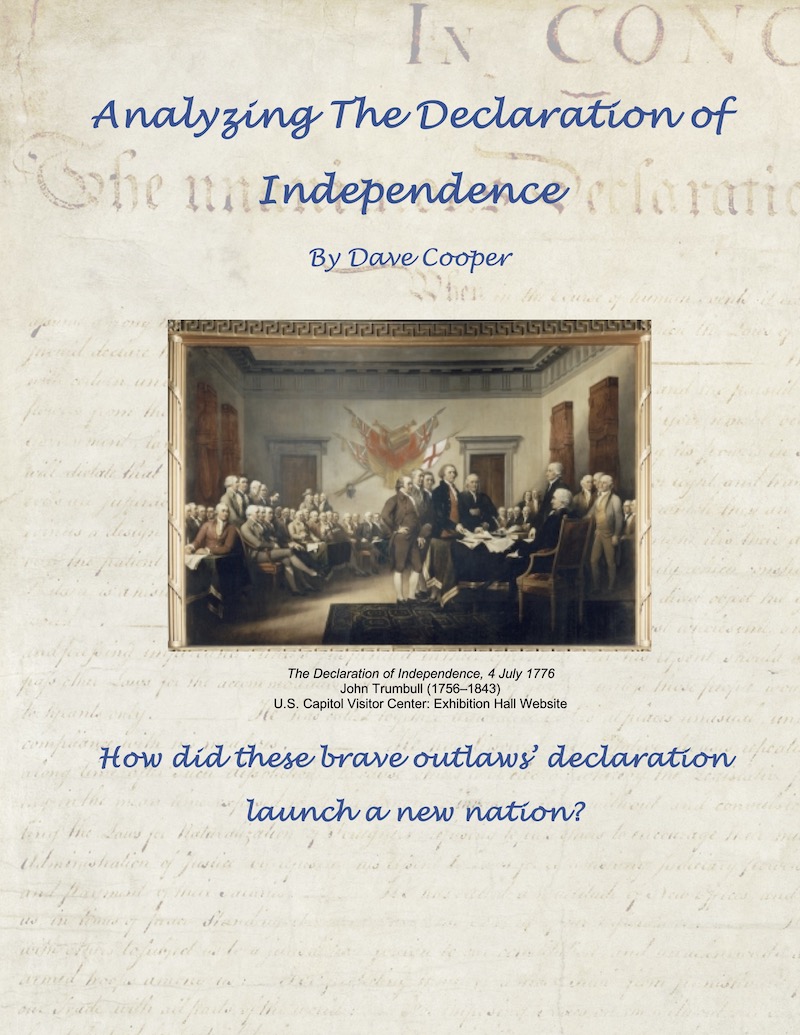
The middle level resource “Analyzing the U.S. Declaration of Independence” guides students through events leading to the writing of the declaration and provides tools to help them analyze its text– to reveal what Jefferson believed a government should do and the specific reasons why The United States was born.
For further reading…
“On this day: No taxation without representation!” National Constitution Center Blog Post October 7th, 2022. https://constitutioncenter.org/blog/no-taxation-without-representation
 david cooper writing
You must be logged in to post a comment.